
The Illusion of Convenience: Rethinking Modular Buildings in Facilities Planning
By Hodgin Serrullo, AICP, and Jonathan Yazzie, APA
Across the United States, school districts, local governments, rural communities, and private organizations increasingly rely on modular and portable buildings as rapid responses to urgent space needs. Portable classrooms, modular offices, and temporary support facilities are often viewed as flexible and cost-effective solutions that can be deployed faster than permanent construction. However, what begins as a short-term remedy frequently evolves into a costly, long-term commitment with operational, financial, and equity implications.
At Albuquerque Public Schools (APS), the largest school district in New Mexico, portable buildings have become deeply embedded within the district’s educational infrastructure. The district serves approximately 64,000 students across 142 schools spanning 14 jurisdictions and roughly 1,230 square miles. APS maintains approximately 1,800 permanent buildings totaling nearly 17 million square feet, along with more than 1,300 portable structures totaling approximately 1.7 million square feet of additional space.
This case study examines the long-term implications of relying on modular and portable facilities within a large public-school system. It explores how comprehensive planning practices can reduce dependence on temporary structures while improving sustainability, operational efficiency, and equity.
Understanding Modular and Portable Buildings
Although the terms are often used interchangeably, modular and portable buildings are distinct facility types. Modular buildings are constructed off-site in factory settings using standardized modules and are generally intended to remain in place for extended periods. Portable buildings, by contrast, are designed to be more easily relocated and are typically self-contained units that can be moved between sites as district needs evolve.
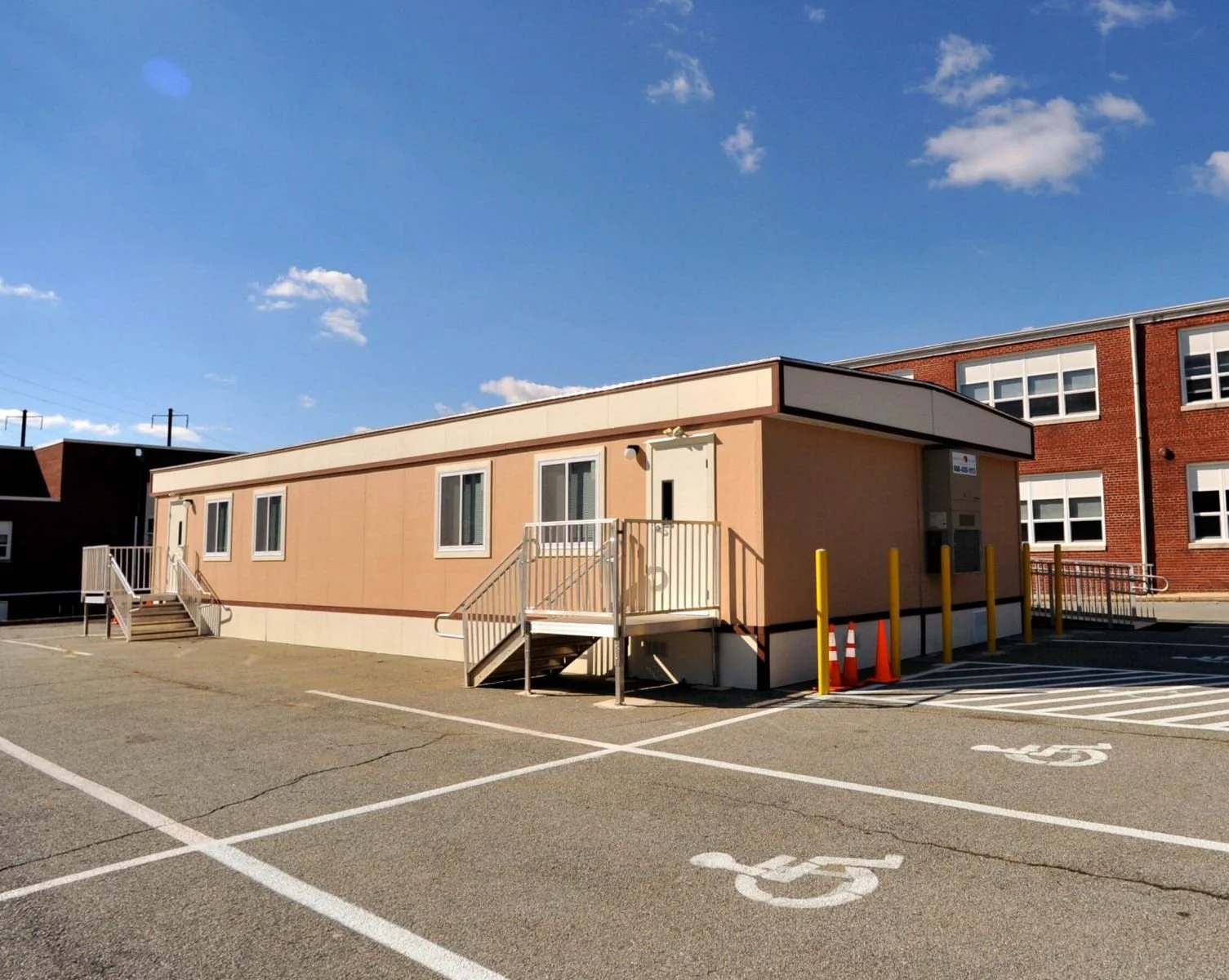
Modular Classroom - Courtesy Modular Genius
Within APS, the most common configurations include:
Single portable classrooms of approximately 840 square feet
Double portable classrooms of approximately 1,680 square feet
Restroom portables
Ellison modular buildings, which combine modular construction with more permanent characteristics, such as built-up roofs and slab foundations
The district uses these facilities for a variety of purposes, including classroom expansion, specialized programs such as Pre-K and special education, administrative offices, construction swing space, and outreach services for underserved populations. Portable structures provide flexibility during periods of enrollment growth, modernization, or emergency response.
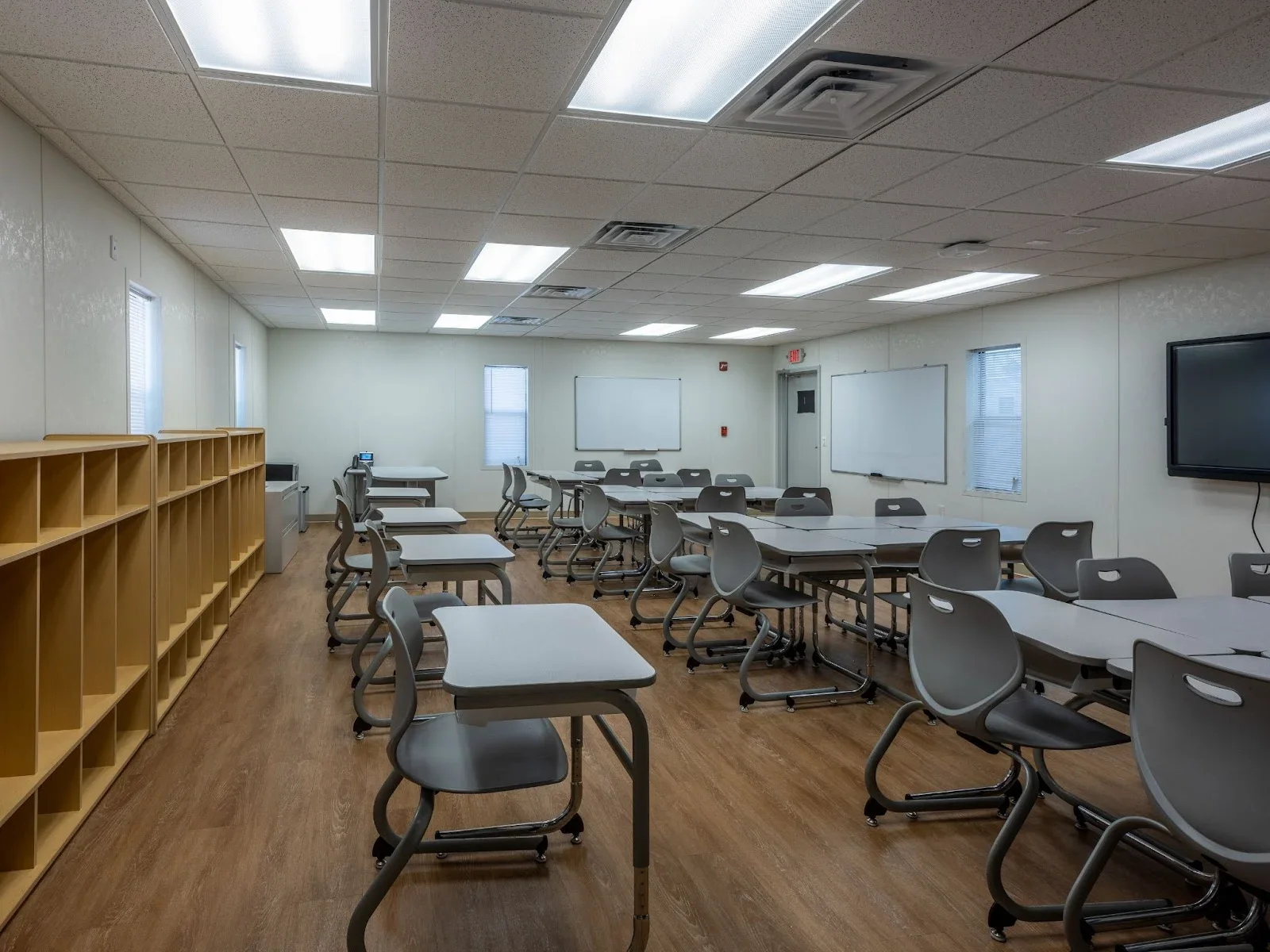
Portable Classroom - Courtesy of Wilmot Modular Structures
APS has also identified several challenges associated with long-term portable use. These include aesthetic and perception concerns, infrastructure and utility limitations, regulatory and code compliance requirements, declining long-term cost efficiency, and operational challenges related to transporting, installing, expanding, and maintaining units.
The Hidden Costs of Temporary Facility Solutions
We identified several planning challenges associated with long-term dependence on temporary structures.
Land Use Challenges
Portable buildings often occupy land originally intended for playgrounds, parking lots, outdoor learning areas, or future campus expansion. Over time, schools can become fragmented into clusters of temporary buildings that disrupt circulation patterns and create disconnected “mini-campuses.” This fragmentation complicates supervision, accessibility, security operations, and emergency response procedures.
Temporary structures also require extensive utility connections. Water, sewer, power, gas, and data systems are frequently extended in a piecemeal fashion to accommodate new units, resulting in infrastructure networks that may not align with long-term master planning objectives. At older campuses or constrained urban sites, utility systems may lack sufficient capacity to support additional portable installations.
Sustainability Concerns
Portable structures present significant sustainability challenges. Many older units rely on inefficient HVAC systems, lightweight materials, and temporary utility connections that increase energy and water consumption. APS spends approximately $50,000 per day on utilities and remains committed to reducing water and energy use through environmental stewardship and conservation initiatives.
Portables are particularly difficult to manage efficiently due to their age, dispersed locations, and frequent maintenance needs. APS often cannot accurately track water and energy consumption at individual portable structures, making long-term sustainability planning more difficult. Their reliance on evaporative cooling systems, inefficient siting, and shorter material lifespans further contributes to higher utility costs, water use, and construction waste.
Because portable units generally have shorter life spans than permanent construction, they also contribute to increased embodied carbon, deferred maintenance, and construction waste as buildings deteriorate and require replacement.
Equity Considerations
Beyond operational issues, portable buildings can significantly affect student experience and raise equity concerns. Portable classrooms often provide inferior acoustics, lighting, temperature control, and indoor air quality compared to permanent facilities. Students assigned to portable campuses may also feel separated from the main campus environment.
Physical separation can unintentionally reinforce perceptions of inequity while complicating student access to shared campus amenities and services. Accessibility concerns are also common. Portable clusters may lack covered walkways, ADA-compliant access routes, or convenient connections to restrooms and common spaces. Their physical separation from the main campus can further complicate security and supervision efforts.
A Comprehensive Planning Strategy
Historically, portables were often installed without comprehensive analysis, resulting in nearly 2,000 portable structures districtwide before the long-term consequences necessitated a more strategic approach.
In response, APS established districtwide standards focused on sustainability, accessibility, security, and equity, shifting from a reactive to a proactive planning model. The district now reviews portable needs and surpluses bi-weekly, identifies portable needs tied to enrollment growth, construction displacement, or program expansion, and tracks projects from planning through post-occupancy to maintain accurate inventory and utilization data.
To coordinate portable management across the district, APS established the Strategic Portable Planning Implementation Team (SPPIT), a multidisciplinary group composed of planners, architects, construction managers, environmental specialists, information technology staff, and maintenance and operations personnel.
The district developed a structured framework for portable planning that includes:
Utilization analysis
Review and recommendations
Budgeting and scheduling
Implementation
Post-occupancy analysis
This framework allows APS to evaluate portable buildings against broader planning considerations, including long-term enrollment trends, modernization priorities, operational costs, security standards, accessibility requirements, and sustainability goals. This approach prioritizes proactive over reactive decision-making.
Managing Surplus Inventory
We implemented a strategy for underutilized portable buildings. Under this process, water, gas, and electrical services are physically disconnected, and units are rekeyed to prevent unauthorized use.
This strategy allows the district to:
Preserve units for future swing space
Reduce operational and utility costs
Prepare structures for resale, storage, or demolition
Historically, the district maintained large portable storage sites where unused units remained indefinitely after removal from campuses. By 2025, the district shifted toward a streamlined strategy in which surplus portables are sold directly from school sites and immediately removed by purchasers. This policy reduced storage costs, deferred maintenance liabilities, and land consumption.
Since 2022, the district has disposed of or demolished 229 portable structures districtwide. Although more than 1,000 portable buildings remain in use or available for deployment, the district’s evolving strategy reflects a growing recognition that long-term dependence on temporary facilities is neither fiscally nor operationally sustainable.
A Case Study of Permanent Facilities Investment
A major redevelopment effort at Navajo Elementary School illustrates how replacing portable infrastructure with permanent construction can improve sustainability and long-term campus functionality.
At Navajo Elementary, the district removed 31 portable buildings totaling approximately 37,856 square feet and replaced them with 28,234 square feet of permanent construction along with a new turf field.
The project also generated measurable environmental benefits. By replacing portable buildings that relied on evaporative cooling systems with permanent facilities using refrigerated air systems, APS eliminated approximately 139,345 gallons of monthly water consumption associated with portable cooling operations. New permanent facilities also incorporated photovoltaic panels to offset increased electrical demand from air-conditioning systems.
For a water-scarce region such as New Mexico, these improvements demonstrate how long-term facility investments can simultaneously support sustainability goals, operational efficiency, and educational quality.
Conclusion
The APS case study demonstrates that temporary solutions can often become long-term liabilities, as the true costs of modular structures extend far beyond their initial purchase and installation. Comprehensive planning is therefore critical to ensuring a proactive, data-driven approach to managing these facilities. By prioritizing sustainability, equity, and long-term fiscal responsibility, institutions can address immediate spatial needs while continuing to support high-quality services and evolving community needs.
About the Authors
Jonathan Yazzie, APA - (jonathan.yazzie@aps.edu) is a School District Planner at Albuquerque Public Schools, Capital Master Plan (CMP) Department since 2019. He utilizes various drafting and graphics software to produce floor plans, emergency evacuation building plans, and other facility data used by the CMP planning division and other departments across the school district.
Hodgin Serrullo, AICP - (hodgin.serrullo@aps.edu) is a School District Planner at Albuquerque Public Schools, Capital Master Plan (CMP) Department since 2021. He specializes in comprehensive school facilities planning, enrollment and capacity analysis, growth management, and long-range capital planning.