
Breaking Up With Parking Regulations to Entice Redevelopment
By Jayna Watson, AICP
In 2020, an important conversation took place in city hall in Spearfish, South Dakota. At stake was if the city was willing to take some risks with ending its love affair with parking regulations in order to make downtown redevelopment a more viable opportunity for land owners. Parking requirements had long been a high maintenance relationship. Although the city had numerous schedules to describe parking requirements, it always resulted in an amount of parking spaces that defied common sense when applied to the downtown core. There is an old saying that applied to the situation: “the definition of insanity is doing the same thing over and over again and expecting different results”. Trying to apply a suburban parking model to a compact urban form was making everyone crazy and unhappy. Time for the break up.
To address this, a new zoning tool known as the C-1 Redevelopment Incentive Plan (Incentive Plan) was created. Under this approach, land owners that meet certain redevelopment criteria can reduce their off-street parking requirement for non-residential uses by 50% and also satisfy a portion of the remaining parking requirements with on-street parking. Since this tool was adopted, four downtown sites have been redeveloped and have added $20 million in property valuation in 5 years. Those sites and the lessons learned are presented in this article.
Background/Context
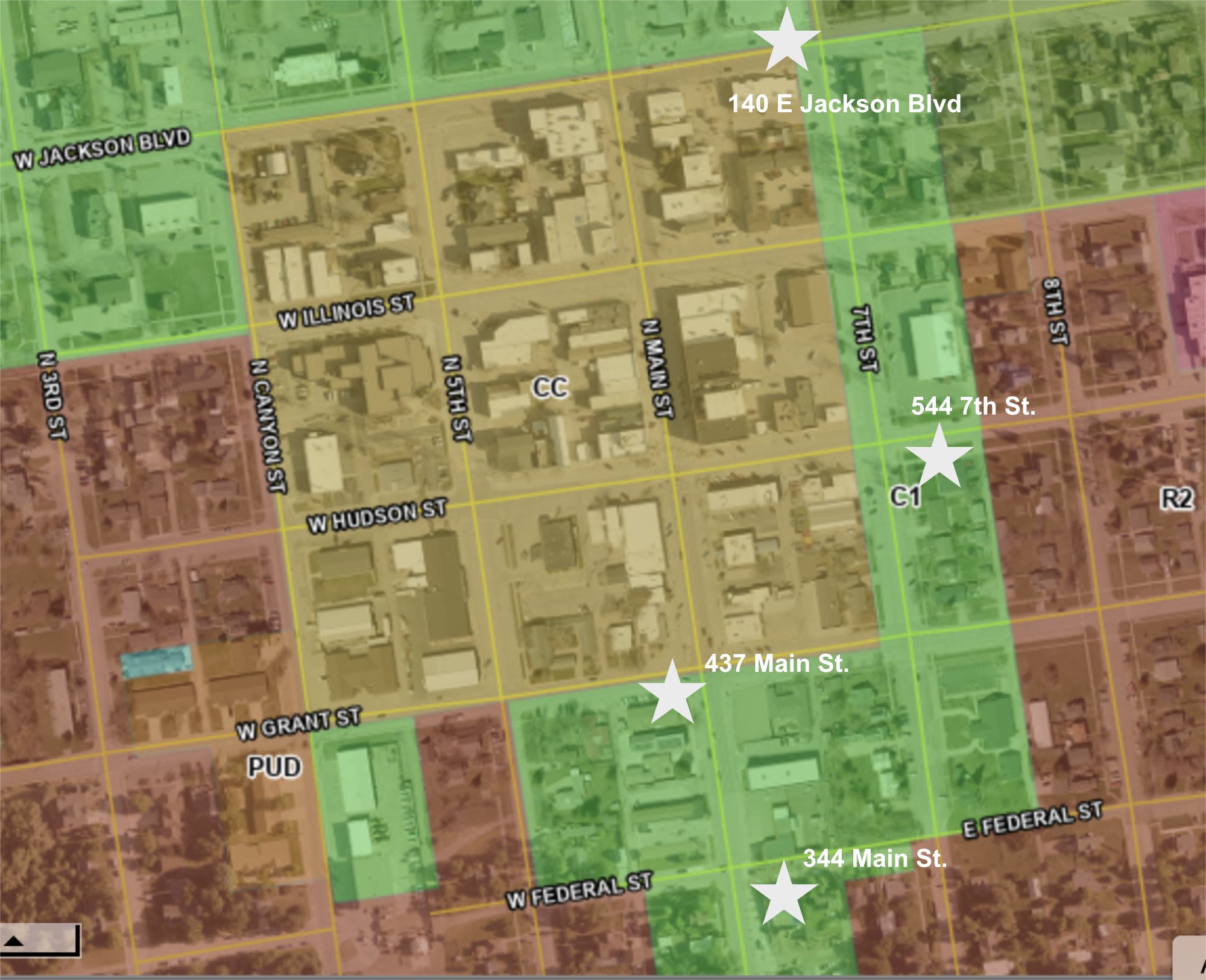
Zoning map of the Spearfish downtown core and location of redevelopment sites
Legend:
Yellow – Central Core zoning/downtown shopping district
Green – C-1 zoning
Brown – R-2 zoning – single and two family residential
The C-1 is a Spearfish commercial zoning district surrounding the periphery of the downtown Main Street shopping district. The typical dimensions of a C-1 parcel are 50 feet wide by 140 feet deep and with alley access. Some property owners control more than one parcel. The allowed land uses in C-1 are residential, office, eating/drinking establishments, retail and similar land uses on the lower end of commercial land use intensity spectrum and properties vary in age and property upkeep. Typical conditions are:
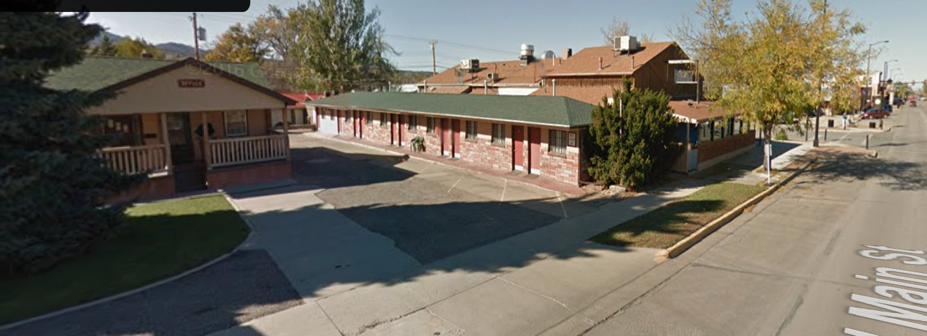
Roadside motels built in the 1940’s to 1960’s
Homes that are 70 to 100 years plus old; some with deferred maintenance and code enforcement issues
Commercial buildings that vary in age, condition, and functionality for today’s business needs
Residential zoning districts abut most C-1 locations
Catalyst of the Break Up – The Kozy Motel 437 Main Street
In 2020, a property owner wanted to demolish his old roadside motel and rebuild a modern mixed-use building consisting of office space and four vacation home suites. The meeting started off with words of appreciation to the owner that the old Kozy Motel (yes, its actual name) was coming down and in its place, the new structure. Then came the first piece of bad news…..not enough space on the site to fit all the required parking plus the building. Shortly after, bad news part 2 since there were no special conditions on the property that would qualify the owner to apply for a parking variance.
Knowing that this would an ongoing issue and a barrier to future downtown redevelopment, it became clear that the old parking rules needed to change and work on the Incentive Plan tool began.
Incentive Plan Criteria
The decision to apply for Incentive Plan approval is voluntary on the part of the land owner. Because the approval is guided by a list of criteria, it is an administrative level of approval by the City Council, similar to a conditional use permit. A land owner who wishes to build on their C-1 zoned property but does not need relief from parking requirements proceeds directly to plan review for their building permit.
Below is a summary of the main criteria that each application must comply with. Specific details on the criteria can be found on the city’s website at https://codelibrary.amlegal.com/codes/spearfish/latest/spearfish_sd/0-0-0-6021
Owners are required to meet 5 mandatory criteria and two optional ones.
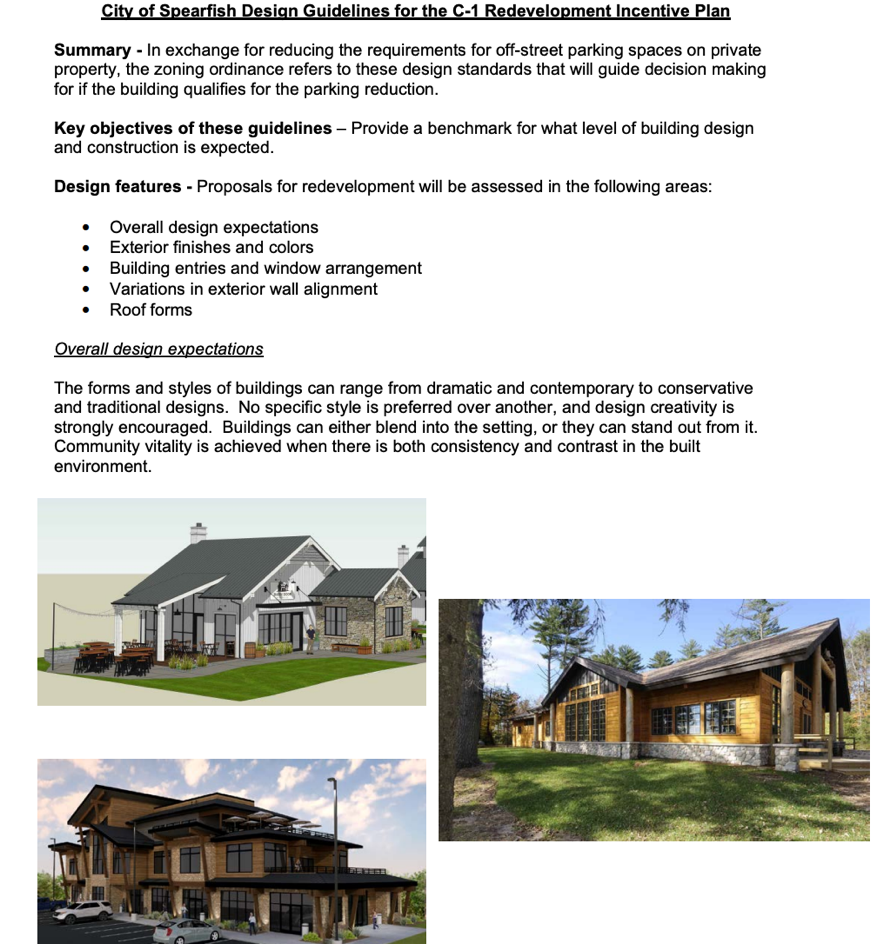
Mandatory Criteria 1. The building design must be per the City of Spearfish Design Guidelines for the C-1 Redevelopment Incentive Plan. A key element of this program is to reward investments in creative architecture and urban design. This required the creation of a published design guideline. A link to that document can be found here with an excerpt of the document below. https://www.spearfish.gov/DocumentCenter/View/1598/Design-Guidelines-for-the-C-1-Redevelopment-Incentive-Plan
Mandatory Criteria 2. The estimated building permit value is required to be at least 2 times the current assessed value of the structure. This review is done by the planning staff and building official based on the applicants submittal information. The rationale behind the valuation needing to be twice the existing was to eliminate basic building remodeling projects from eligibility, i.e., new roofing/siding.
Mandatory Criteria 3. Parking for non-residential use is calculated using the rates in the zoning code and then reduced by 50 percent. Parking can be provided either on private property, within the public right of-way, or both. As the ordinance was being created, staff did some case studies using a typical 50 x 140 lot to find the right balance for how much of a reduction seemed reasonable. Fifty percent offered the best balance to enable more site buildable space but not at the expense of impacts to local streets.
Mandatory Criteria 4. A maximum of ten parking spaces are permitted within the right-of-way adjacent to the owners property. From the case studies, this amount was determined to be the best fit to achieve a balance between business use of the right of way for parking, traffic flow on the adjacent street, and to reduce impacts to adjoining residential areas.
Mandatory Criteria 5. Parking for residential, hotel, motel, bed and breakfast, vacation home rentals or any use with overnight parking must be provided on private property. This provision was necessary to ensure that snow removal and street cleaning operations could be as efficient as possible and without having to navigate around parked cars.
To encourage public amenities, owners must provide two from this list of optional criteria:
Optional Criteria 1. Widen existing sidewalks to a minimum of eight feet. Many of the sidewalks in the downtown are 4 feet wide. Because these old sidewalks are often demolished during construction, this was an easy way to achieve a win for pedestrian infrastructure.
Optional Criteria 2. Provide new street trees at the rate of one per 50 feet of site frontage. The urban street tree canopy is a key element in what makes downtown feel different from the rest of Spearfish, and this feature enhances the site aesthetics as well.
Optional Criteria 3. Provide landscaping per city code. Because C-1 properties can qualify for a special exception (not a variance) to waive landscape requirements, plant material in these urban settings is an important amenity.
Optional Criteria 4. Utilize ecologically sustainable designs and technologies, which are in line with the Goals of the comprehensive plan, such as, but not limited to:
a. Water conservation, energy efficiency and renewable energy; and
b. Enhanced protection from fire, flood and other natural disasters.
Investments in sustainability are expensive and should be rewarded in land use decisions.
Optional Criteria 5. Other criteria deemed to have a significant public benefit. No matter how much planners try to anticipate outcomes when creating criteria, there is always something unexpected proposed that may also be beneficial to the community. Having an open category is a great way to encourage public paths, open space, public safety improvements, recreation, etc.
The Sites
All the properties described below met the five mandatory criteria and two criteria from the optional list, which were different for each site.
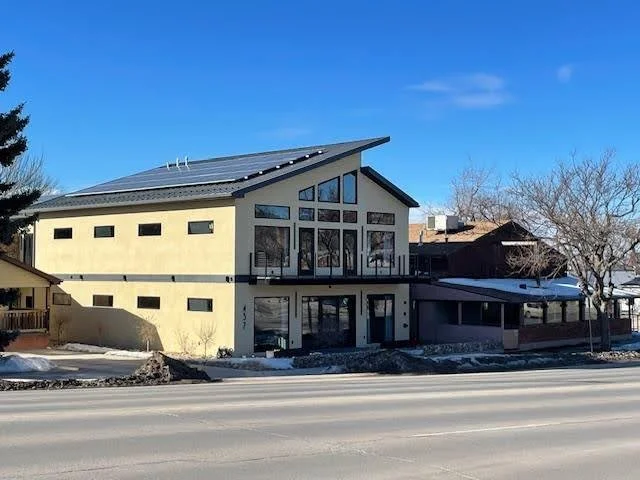
437 Main Street – The Cobblestone (fka the Kozy Motel)
Property Size: 6,868 square feet
Proposal: Office space 3600 square feet; 4 vacation home suites
Code required parking before the 50% reduction: 22 spaces
Parking provided after reduction: 11 spaces; 7 along street curb, 4 behind the building off the alley.
Before – The Kozy Motel
Below: After completion in 2021 – note roof covered in solar panels
Lessons Learned:
Require thorough submittal information so that the public and decision makers have a clear understanding of what is proposed. Written narratives should always be accompanied by professionally drawn building elevations and site plans.
Make staff reports clear and concise and provide written findings that document what the approval consists of. For example: “Final building construction will be in significant compliance with the building elevations dated 2-15-2025 as found on attachment 3 to the March 1, 2025 staff report”. Complete records enable future staff members to understand the project history.
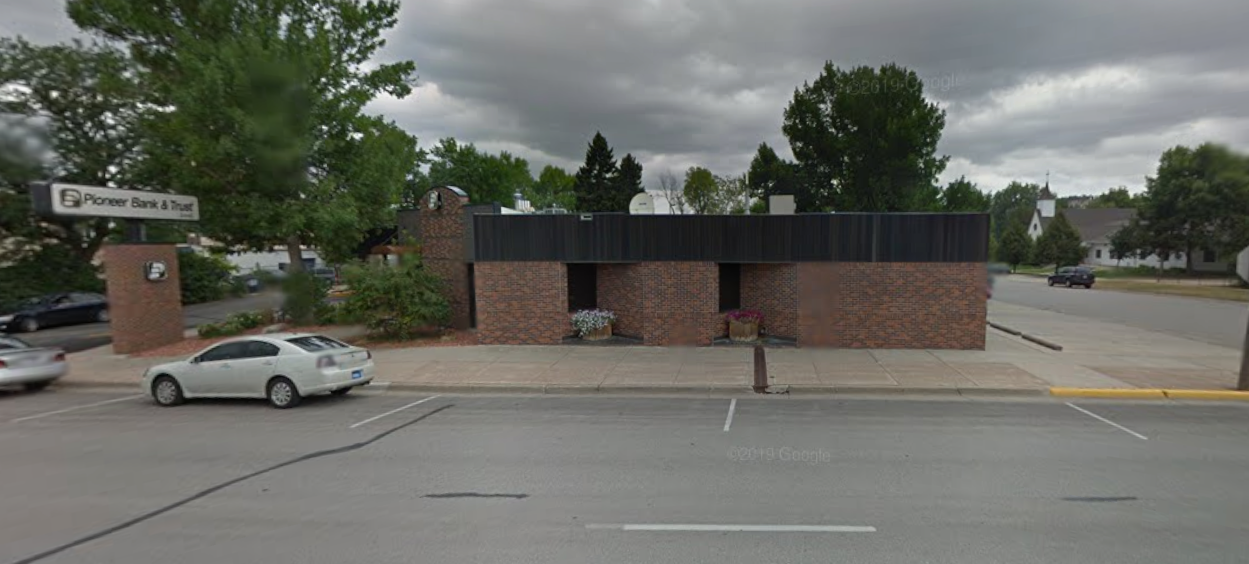
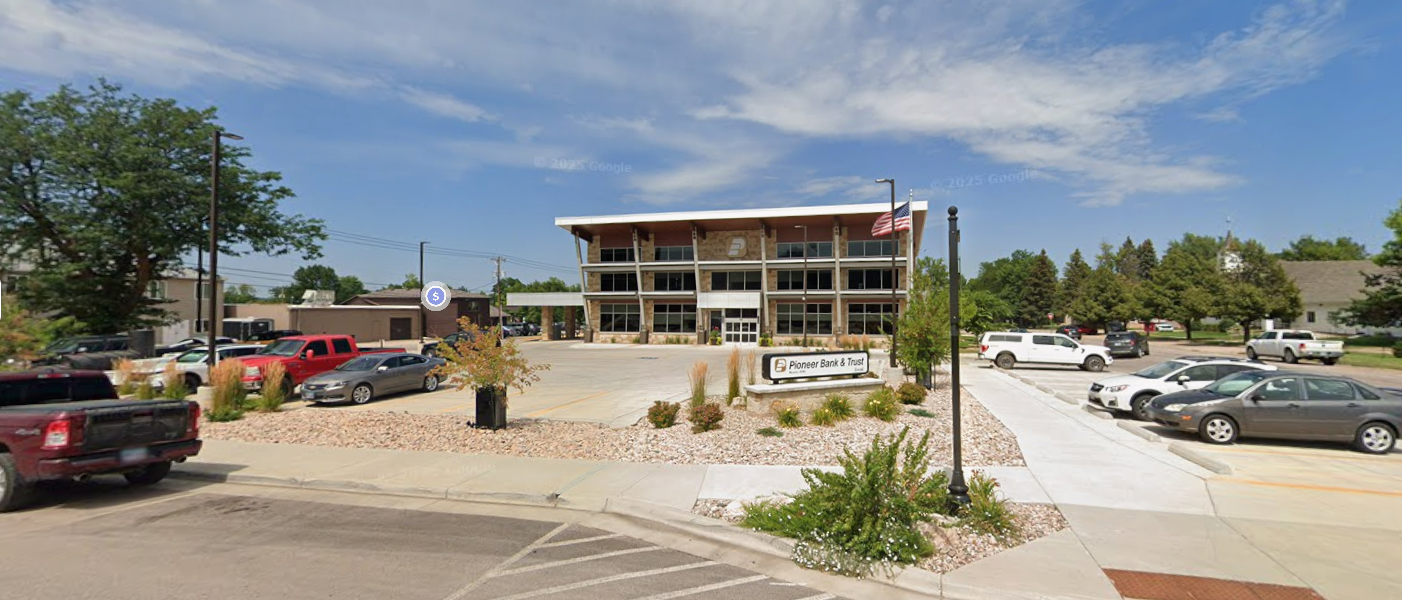
140 E Jackson - Pioneer Bank
Property Size: 42,000 square feet
Proposal: Bank and office space 23,000 square feet
Code required parking before the reduction: 85 spaces
Parking provided after reduction: 66 spaces; 10 spaces in public right of way (6 existed before redevelopment), remainder on bank property. Owner chose to not pursue the full 50 percent reduction.
Before – Pioneer Bank
After completion in 2023 – Pioneer Bank
Lessons Learned:
The photo of the new building was taken on a weekend, however during the week day, the front parking lot often has less than 10 cars. Consider standards that would reduce the size of the parking area along street frontages.
The landscape planters along the street are between 6 and 10 feet wide. A minimum of 15 feet would have enabled a more significant front buffer.
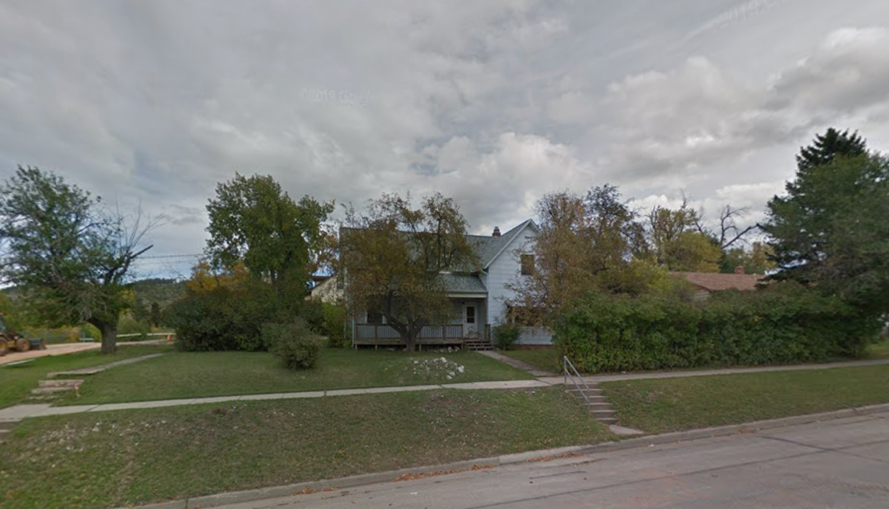
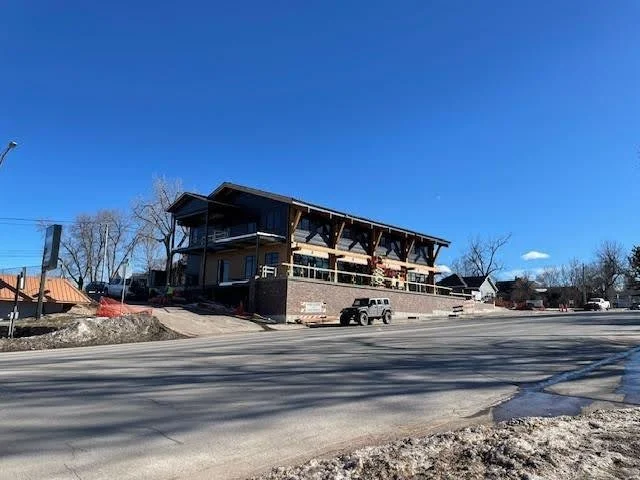
344 Main Street – H&R Properties
Parcel size: 14,000 square feet
Proposal: 7,155 square feet of mixed-use including retail, office, and 6 apartments
Code required parking before the reduction: 28 spaces
Parking provided after reduction: 14 on property, 5 parallel spaces curbside on Main Street
Before – H&R Properties
Nearing completion in spring 2025 – H&R Properties
Lessons Learned:
The existing sidewalks were very narrow and inaccessible (note the stairway in the top photo that drops to the street curb in a random location. Enabling credit to be given through the optional criteria resulted in a new, generous width sidewalk.
A large outdoor patio for a future restaurant tenant activated the street frontage.
This redevelopment required that the city vacate a portion of the right of way to accommodate the patio. Often, vacates are denied because that right of way may be necessary for public infrastructure, some day. While this policy does favor the needs of public agencies, it can be a significant barrier to redevelopment.
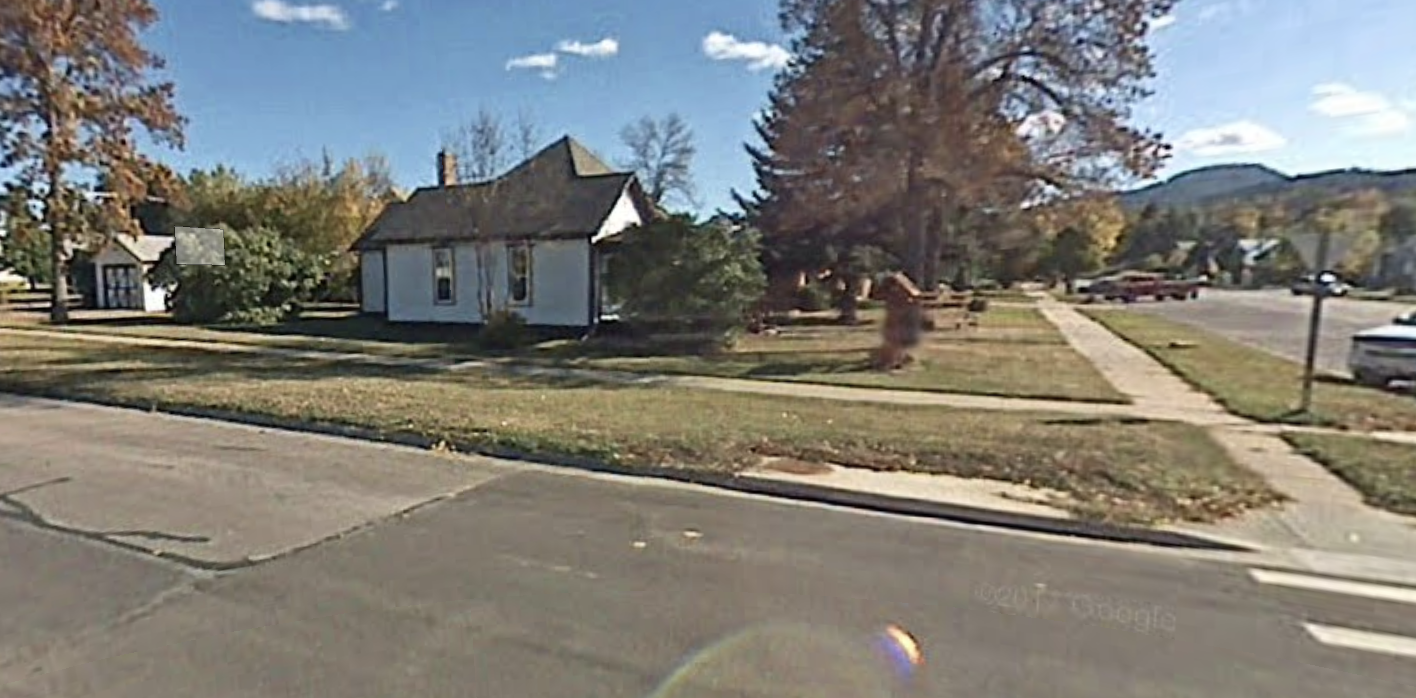
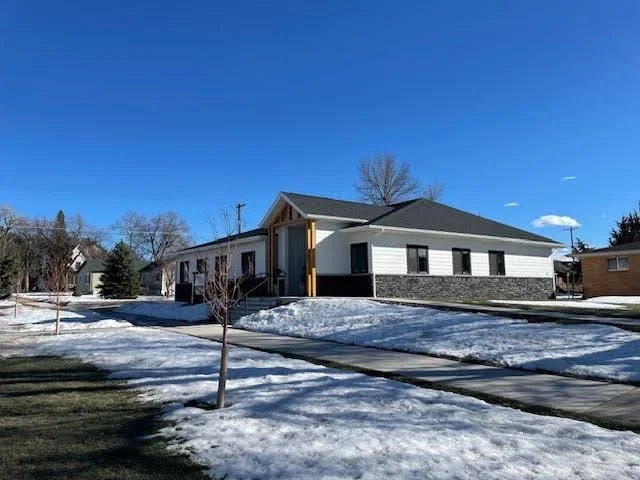
544 7th Street – Office Building
Parcel size: 10,559 square feet
Proposal: 2,760 square feet of office space
Code required parking before the reduction: 14 spaces
Parking provided after reduction: 7 on owner’s property, 0 in the public right of way
Before:
After Completion – 2023
Lessons Learned:
The scale of the project is not as important as the quality. Good redevelopment policies embrace a range of project size and complexity.
New street trees are an important street amenity especially where the tree inventory is declining from disease. Diversification in tree species helps buffer the impact from when a pest or disease attacks a specific type of tree.
Summary:
Rewarding good design with parking reductions requires a system in place to ensure that what was approved by the governing body is reflected in the final construction. This requires that those who are reviewing the final building construction plans have copies of the original approval records to ensure compliance. Plans that don’t comply must receive an updated approval from the governing body. This accountability is important to gain the public’s trust of these types of projects.
None of the four sites created new parking impacts on the street system or on the adjoining residential areas. This is an important finding because throughout this process, the question was: “Why can’t the owner just build less square footage and provide all the parking they need on their site?” The answer is, of course they could. However, it begs the next question: what is gained for the community when private vehicle parking space has a higher value than investing in our downtown businesses?
About the Author
After serving in several planning leadership positions in Arizona and South Dakota, Jayna is a semi-retired planning consultant serving public and nonprofit agencies, as well as helping property owners through the development approval process. Her skills range from broad policy development to final implementation methods. Jayna is an AICP planner and registered landscape architect in the state of Arizona. When not working on a planning project, Jayna can be found behind the artists easel, or enjoying time with family and friends.