
An Even Better Way to Zone: Book Summary
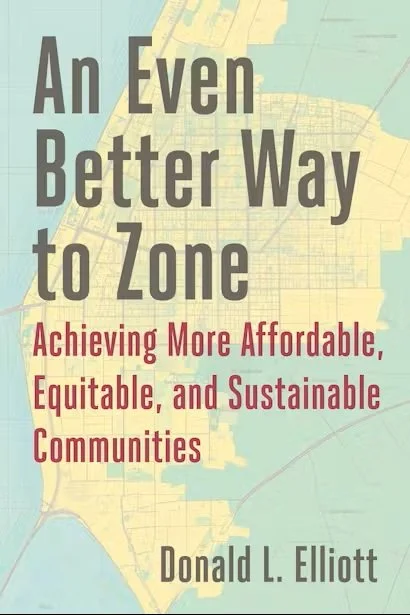
Island Press has just published a new book by Denver-based attorney/planner Don Elliott on zoning reform titled An Even Better Way to Zone. This new book draws on Mr. Elliott’s 40 years of experience as a planning consultant and attorney assisting over 80 communities in the U.S, Canada, and elsewhere to update their zoning and land development regulations. Although similar in name to Elliott’s first book – A Better Way to Zone (Island Press, 2008) -- this new work is not a revised edition of that book. Instead, it offers recommendations on new topics that pose particular zoning challenges in the 21st century.
An Even Better Way to Zone offers specific, detailed guidance on how zoning can be reformed to address three key challenges: (1) the need for more affordable housing, (2) the need for more environmentally sustainable and resilient development, and (3) the need for more equitable zoning decisions that do not perpetuate disparities in income, wealth, and opportunity. While most recent comprehensive plans call for zoning reform to address all three of these challenges, the needed changes to zoning regulations come slowly if they come at all. In each of these areas, the book emphasizes the need to focus on reuse and redevelopment of land and buildings over time (which will happen repeatedly) rather than just the initial development of land (which will only happen once).
An Even Better Way to Zone addresses not only what changes need to be made but provides good supporting detail on why those changes will make a difference and how to build the support needed to make them a reality. The book is written in plain language and aimed at planners, planning students, and appointed and elected officials involved in planning and zoning – rather than an academic audience. The message is organized into eight substantive chapters: (1) The Dangerous Consequences of Current Zoning, (2) How Zoning Works, (3) What is Wrong With Our Current Approach, (4) Fixing the Rules – and the Rewards, (5) Fixing the Procedures, (6) Fixing the Map, (7) Resolving the Tensions, and (8) Five Key Principles for Better Zoning in General.
The first three chapters provide background on how and why zoning fails to work the way we want it to. It acknowledges the racist and classist roots of modern zoning but insists that rules written by humans can be rewritten to produce more equitable results. The second chapter reviews the basic mechanics of how zoning works. It emphasizes that the system is very good at excluding unwanted building uses and forms, but much weaker at encouraging investment that the market will not support. As a result, it is prone to over-exclusion of things we actually need in order to achieve our community planning goals. A helpful chapter goes on to identify five common “thought mistakes” that disconnect zoning from the realities of real estate markets and city management, and that lead to many unintended consequences we later regret.
The next three chapter contain specific recommendations for zoning changes to improve the affordability of our housing, the sustainability of our development patterns, and the equity of our zoning decisions. The book organizes this content into discussions about (1) changing the rules and incentives in the zoning text, (2) changing the procedures used to make zoning decisions, and (3) changing the zoning map. The chapter on text changes is the longest in the book, and it recommends numerous text changes to promote the production and preservation of affordable housing, to reduce risks to public health and safety created by continuing climate change, and to remove unrecognized biases in our zoning procedures.
Zoning procedures are often as important – or more important – to the effectiveness of zoning as the rules themselves, and the chapter on procedural change provides a much-needed re-focusing of discussions toward this topic. More specifically, the book reinforces the need to minimize the time, expense, and uncertainty of zoning procedures in order to encourage the types of development we say we want. It also emphasizes that the negative impacts of complex and unpredictable procedures fall most heavily on small businesses and historically disadvantaged communities. The book also includes a helpful section on the appropriate role of the public in different types of zoning decisions.
The chapter on zoning maps includes a helpful discussion of redlining, the difficulties in removing its long shadow, and the negative consequences that can follow simplistic attempts to “unredline” without careful analysis of the impacted communities. The final chapters of the book include a helpful chapter on how to resolve tensions when zoning changes to address one community goal will make it more difficult to address others, as well as five general rules on how to draft zoning changes that will stand the test of time. An Even Better Way to Zone promises to be a valuable contribution to the practice of zoning and the achievement of better American communities.
About the Author
Donald L. Elliott is a Senior Consultant and past Director with Clarion Associates, LLC, a land use consulting firm with offices in Denver and Chapel Hill. He has assisted over 70 US and Canadian communities to update plans and regulations related to zoning, subdivision, housing, sustainability, fair housing, and land development. Elliott teaches a graduate level course on Land Use Regulation at the University of Colorado at Denver College of Architecture and Planning and is a former member of the Denver Planning Board. He is author of A Better Way to Zone and coauthor of The Rules that Shape Urban Form and The Citizen’s Guide to Planning.