
TIF Demystified: Strategy, Risk, and Opportunity
by Todd Meierhenry, Meierhenry Sargent LLP
Tax increment financing—better known as TIF—is often described as a way to finance development without raising the general population's tax rates. That explanation is appealing, but incomplete. TIF does not create free money. It commits a portion of anticipated future tax revenue to a defined geographic area and for a specific purpose, sometimes for decades.
For planners, the essential question is therefore not simply whether a project qualifies for TIF. The better question is whether TIF is the right tool for advancing an adopted public objective while keeping the community’s risks manageable.
Begin with the public purpose
A sound TIF analysis begins with the comprehensive plan, capital improvement program, housing strategy, infrastructure plans, and other adopted community priorities. What public outcome is the jurisdiction trying to achieve? What barrier is preventing that outcome? Why is TIF more appropriate than grants, assessments, development fees, phased improvements, or other financing tools? (improvement districts, community facility districts (CFD))
TIF tends to be a stronger fit when a clearly identified financial gap prevents redevelopment, infrastructure installation, brownfield remediation, infill housing, or another adopted priority. It is a weaker fit when development is already likely to occur, when a project merely shifts economic activity from another part of the community, or when district boundaries are drawn primarily to capture ordinary appreciation.
A good project is not automatically a good TIF project.
Understand what the increment represents
In a typical property-tax TIF district, the assessed value existing when the district is established becomes the base for allocating revenue. Taxes associated with increases above that base—the increment—are directed to eligible improvements, project reimbursements, or debt service.
The increment, however, is only a forecast. Actual revenue may be affected by construction delays, slower-than-expected growth, tax appeals, delinquencies, statutory limits, market changes, or the failure of a major taxpayer. Gross increment also does not equal debt capacity. Administrative expenses, reserves, financing requirements, and ongoing maintenance costs must be considered.
The most important financing question may be: Who absorbs the shortfall if the increment does not meet expectations?
Pay-as-you-go reimbursement generally places less risk on the public because payments are limited to revenue actually received. Issuing debt against projected increment can deliver infrastructure sooner, but it increases exposure to forecasting, interest-rate, and coverage risks. A pledge of broader governmental revenue or credit can shift still more risk to the community.
Treat “but for” as a real test
Many TIF programs require a finding that the desired development would not occur, or would not occur in the same form or timeframe, “but for” public assistance. That finding should be supported by evidence rather than treated as ceremonial language.
A serious “but for” review identifies the specific gap, examines development costs and financing terms, considers market evidence and alternatives, and determines the smallest public intervention necessary to change the outcome. Assistance should be capped, phased, and tied to demonstrated need.
Make promises enforceable
TIF proposals often contain ambitious promises: jobs, housing, infrastructure, tax-base growth, environmental cleanup, or neighborhood revitalization. Those promises have limited value unless they are translated into measurable obligations.
Development agreements should identify:
The public benefit, its intended beneficiaries, and the completion deadline.
Evidence required before reimbursement.
Responsibility for cost overruns, delays, revenue shortfalls, and maintenance.
Reporting and monitoring requirements.
Remedies when performance standards are not achieved.
Depending on applicable law and the financing structure, remedies may include withholding payments, reducing benefits, requiring cure, terminating assistance, or recovering prior payments.
Planners remain important after adoption
The planner’s role does not end when the district is approved. TIF arrangements often outlast staff members, elected officials, development teams, and market cycles. Planners can preserve institutional memory and maintain the connection between the adopted plan, the development agreement, project implementation, and the promised public benefits.
Annual reporting should compare projections with actual performance, explain material variances, identify responsible parties, and recommend corrective action. Communities should also monitor service demands, maintenance costs, displacement pressures, effects on existing businesses, and impacts on overlapping taxing entities.
Ultimately, TIF is neither inherently good nor inherently bad. It is a powerful but specialized tool for allocating public revenue and risk over time. Its responsible use depends on five evidence-based findings: the proposal is legally authorized, strategically aligned, genuinely necessary, financially resilient, and subject to meaningful public controls.
When those elements are present, TIF can help unlock difficult community investments. When they are absent, the right response may be to gather better evidence, redesign the agreement, reduce the public exposure, choose another tool—or decline the proposal.
Sample TIF Projects
Napa Junction Rail Industrial Park — Yankton County, South Dakota
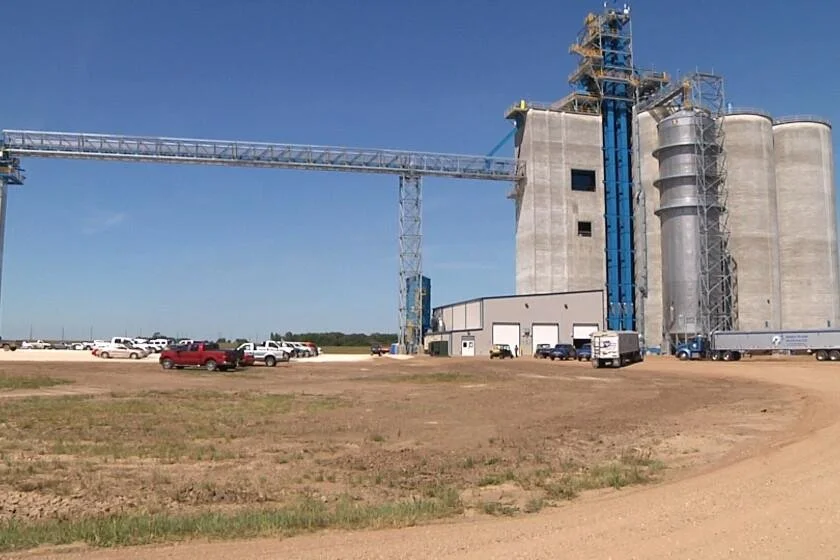
A private developer wanted to establish a rail-served industrial park with specialized grain-handling facilities. The property had significant potential, but the connecting road was gravel and could not accommodate the heavy truck traffic necessary for the operation.
The county obtained a $6 million low-interest infrastructure loan from the South Dakota Department of Transportation. A TIF district was established to repay the loan using future property tax increments. The developer also guaranteed debt payments if the increment proved insufficient.
Why it's compelling: The FHWA case study explicitly states that the industrial park would not have happened without TIF. It also describes how the county structured the arrangement to limit its financial risk.
Total infrastructure investment: approximately $7.725 million.
TIF financing: $7.25 million.
TIF term: 2015–2035.
Result: A rail-served industrial park with improved road, electrical, and other infrastructure.
References: FHWA – Napa Junction Rail Industrial Park TIF case study · South Dakota News Watch – Projects that TIFs built (2025)
Old Sawmill District — Missoula, Montana

The former Champion Sawmill was a 46-acre industrial property across the Clark Fork River from downtown Missoula. It had been vacant and contaminated for approximately 15 years.
Environmental cleanup costs were a major obstacle to redevelopment. The Missoula Redevelopment Agency used TIF to support the financing of environmental remediation, helping make the property developable.
The Montana Department of Transportation reports that $1.125 million in TIF funding covered nearly half the remediation costs. Subsequent project documentation describes a larger brownfields revolving loan and TIF repayment arrangement, which eventually increased to $1.775 million.
Why it's compelling: Contaminated industrial properties often have costs that make private redevelopment financially impractical. TIF helped bridge that gap and unlock a major underutilized property.
Site: 46 acres.
Environmental remediation financing: $1.125 million initially, later increased through the loan arrangement.
Planned development: nearly 1,000 residential units, over 150,000 square feet of commercial space, and a 15-acre park.
References: Montana DOT – TIF examples, including the Sawmill District · Missoula Redevelopment Agency – Master Project List (2025) · Missoula Redevelopment Agency financial documentation
Milltown Park — Sandpoint, Idaho
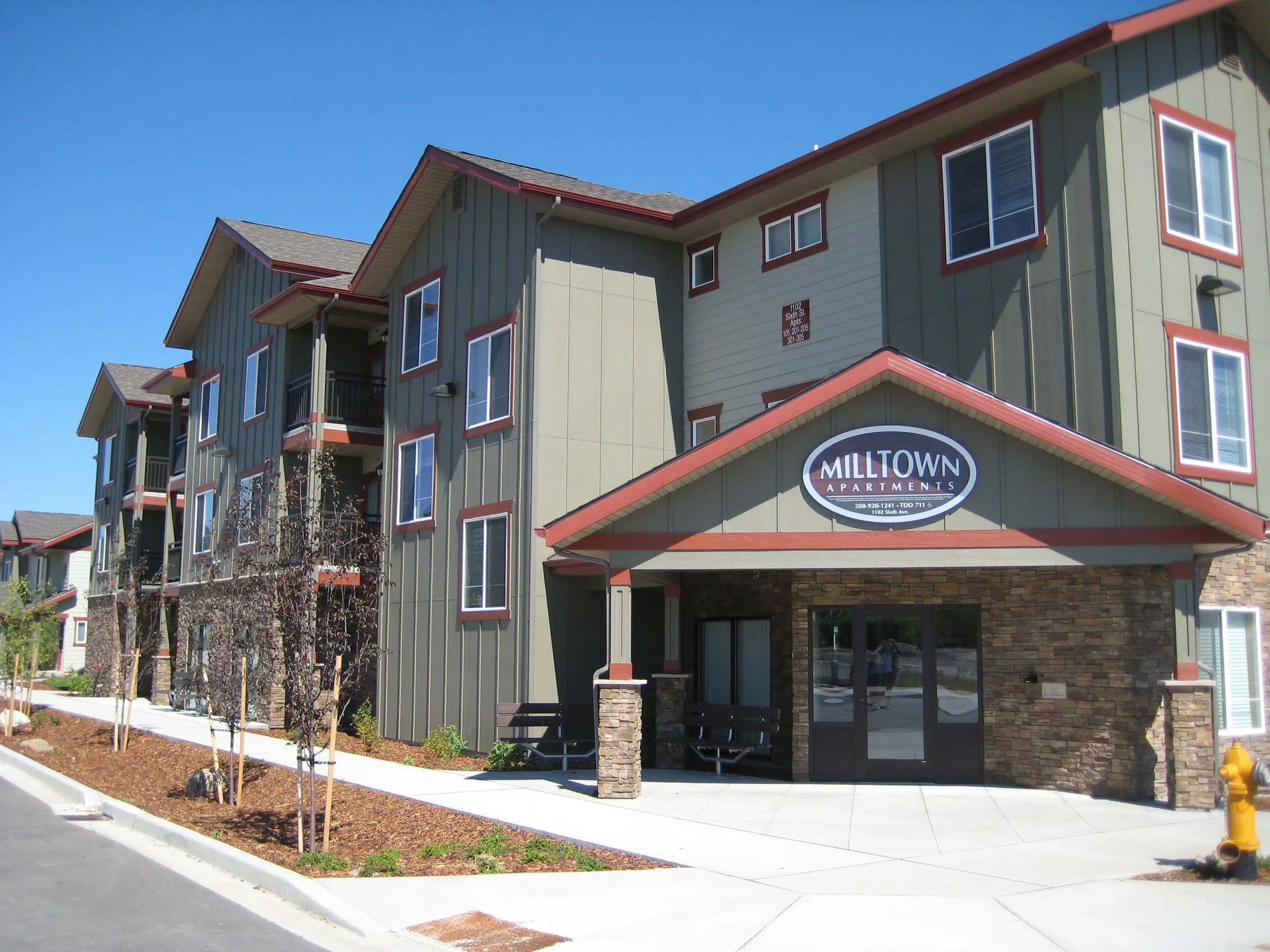
The former lumberyard and mill site was approximately 26 acres. The mill closed in 2004, leaving behind a contaminated property that affected local waters. The community had also lost industrial employment and was experiencing increasing pressure on affordable and workforce housing.
The redevelopment combined TIF with a USDA Rural Housing Super Green-LEED Platinum loan to clean up and redevelop the property.
The resulting housing development incorporated solar and geothermal heating and cooling systems. The case study reports:
$27 million in total income.
$64 million in increased property value.
$3 million in increased state tax revenue.
Why it's compelling: This project brought together two challenges common in resource-dependent communities: the legacy of an abandoned industrial site and the need to transition toward a more diversified economy with housing opportunities.
References: Milltown Park Project – Sandpoint, Idaho (case study PDF) · Milltown Park LLC – redevelopment reference document
Whitefish, Montana — Downtown and civic infrastructure

Whitefish established its urban renewal/TIF district in 1987 after identifying inadequate infrastructure as a significant obstacle to economic development.
Over its lifetime, the district supported:
Reconstruction of City Beach.
Downtown parking facilities.
Multiple street reconstructions.
A pedestrian footbridge.
Parks and recreation facilities.
A new $16 million City Hall and parking structure, completed in 2017, paid for entirely with TIF funds.
The city manager reported that many of these projects likely would not have occurred without the district.
Why it's interesting: This is a good example of how a small resort community can use TIF to build the public infrastructure and amenities needed to accommodate growth and tourism without relying entirely on general tax revenues.
References:
Silver City Downtown TIF — Silver City, New Mexico

Silver City approved a TIF district in 2016 covering approximately 350 commercial parcels in its downtown redevelopment area.
The district was expected to generate approximately $500,000 over 20 years. Although relatively modest, the intent was to provide matching funds and financing gaps for smaller downtown improvement projects.
Why it's interesting: This is a useful model for small communities where the TIF revenue stream is not large enough to support a major bond-financed project but can help make smaller redevelopment projects feasible.
Reference:
- New Mexico MainStreet – Metropolitan Redevelopment Area Implementation Toolkit (2020) (page 20).
About the Author
Todd Meierhenry is a founding partner of Meierhenry Sargent LLP in Sioux Falls, South Dakota, with over 38 years of experience in municipal finance, real estate law, and economic development. He serves as bond counsel, underwriter’s counsel, and a licensed Federal Municipal Advisor, advising on the structuring, issuance, and disclosure of municipal bonds, including single-family mortgage revenue bond programs. He currently serves as President of the American College of Bond Counsel.